Simeone Silla, or Sim Silla, (born 1960) is a Kaskivian politician, economist, and the historic founder of the Social Democratic Party (SDP). Serving continuously as the Member of Parliament for Ateneo Picane Central since 1994, Silla is universally regarded as the visionary architect who saved the Kaskivian political left from total electoral extinction at the turn of the 21st century.
Recognizing that the legacy of the old United Socialist Party (USP) had been permanently destroyed by the embezzlement scandals of the 1990s, Silla executed a massive ideological coup in the year 2000. He formally dissolved the remnants of the USP and founded the modern SDP, successfully corralling the fractured progressive vote and providing the left with a modernized, tech-friendly foundation. Leading the SDP through the 2002 and 2010 elections, he rebuilt the party into the sole viable opposition to the conservative establishment. Though he stepped down as leader in 2014, Silla remains a highly popular, influential MP and a crucial, stabilizing mentor to the current Prime Minister, Vera Donini.
Early Career and the USP Collapse (1994–2000)
Born into an academic family in the vibrant university city of Ateneo, Silla was educated in economics and public policy. Silla’s early academic work was heavily focused on the inefficiency of command economies. He graduated with top honors following the publication of his 1982 thesis: “Comparative Logistics Constraints: An Analysis of State-Subsidized Grain Haulage Bottlenecks in the Eastern Steppes vs. Free-Market Distribution.” This early obsession with logistical bottlenecks heavily informed his later tech-friendly political platform.
He entered parliament in the 1994 General Election, winning the urban constituency of Ateneo Picane Central under the banner of the United Socialist Party (USP).
As a young, idealistic MP entering parliament in 1994, Silla was immediately forced to witness the humiliating death of his own party. The USP was led by the deeply corrupt Bettino Lanzone, who spent the mid-1990s dragging the progressive movement through a series of grotesque embezzlement trials before finally being arrested and imprisoned in 1995. The 1994 election saw the explosive rise of the corrupt media tycoon Vulpiano Luppino (NNV), while the USP was utterly decimated by a staggering array of internal embezzlement scandals, dropping to just 45 seats.
Throughout the disastrous, hyper-capitalist Luppino administration (1994–2002), the 34-year-old Silla served as a frustrated backbencher. He watched as the Kaskivian left repeatedly failed to effectively counter Luppino’s corruption because the electorate fundamentally associated the USP brand with archaic, mid-century bureaucracy and financial malfeasance.
Founding the SDP and the 2002 Election
By the year 2000, Silla realized that internal reform was impossible; the old left had to be destroyed to be saved. Utilizing his deep ties to the progressive academics in Ateneo and frustrated urban tech workers in Finicoli, Silla orchestrated a monumental shift.
He formally dissolved the remnants of the USP, personally authoring the 485-page 2000 Transitional Asset Reallocation Protocol, which legally transferred the ownership of all 84 USP regional union halls, 13 printing presses, and the party’s pension liabilities. In its place, he founded the Social Democratic Party (SDP). Silla’s new platform abandoned the militant unionism and heavy industrial centralization of the past. Instead, the SDP advocated for a modernized, tech-friendly welfare state, robust digital civil liberties, and an end to the crony capitalism that defined the Luppino era.
In the 2002 General Election, while Elena Fiori and the KCA won a massive conservative landslide, Silla achieved a profound structural victory on the left. The newly minted SDP successfully absorbed nearly all defecting USP members and captured 29.1% of the vote. Winning 36 seats, Silla instantly established the SDP as the undisputed foundation of the 21st-century progressive movement in Kaskiv.
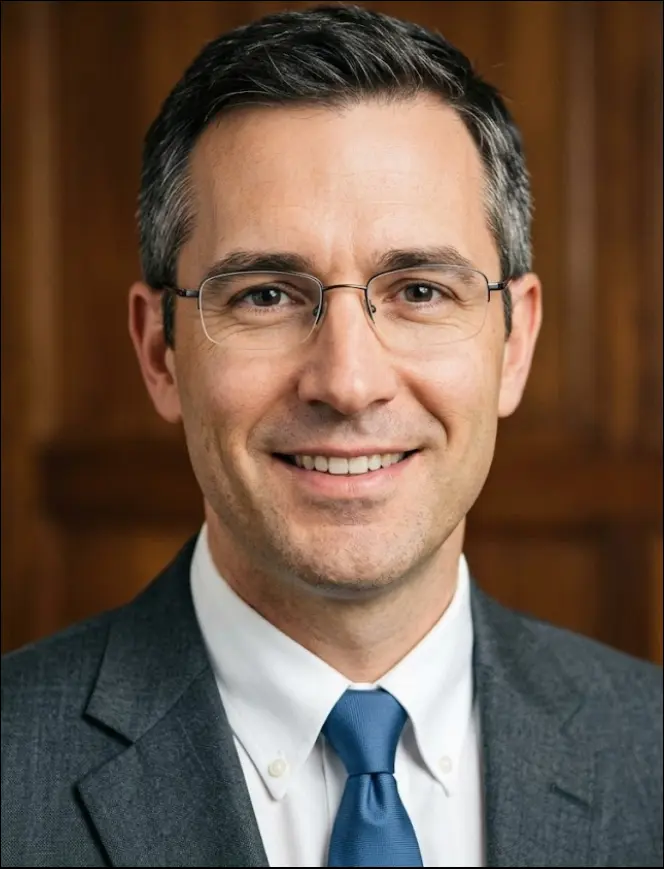 Silla's portrait for the 2002 parliament.
Leadership in Opposition (2002–2014)
For the next twelve years, Silla served as the Leader of the Opposition against Prime Minister Elena Fiori. While Fiori consumed the nation’s attention with her aggressive “Gas Wars” against the Divine Republic of Kresimiria, Silla methodically rebuilt the SDP’s grassroots infrastructure in the major cities, focusing heavily on youth engagement and digital rights.
His methodical approach yielded massive dividends in the 2010 General Election. While Fiori narrowly retained power in a minority government, Silla’s SDP surged to 32.5% of the vote, nearly doubling their parliamentary presence to 65 seats. This massive breakthrough proved that Silla’s modernized, tech-friendly platform was highly capable of peeling urban professionals away from the conservative establishment.
The 2014 Resignation and the Monet Crisis
Believing his mission to successfully rebuild the left was complete, Silla voluntarily stepped down as SDP leader in 2014. He returned to the backbenches to focus on his constituency in Ateneo.
His departure triggered a brief, highly chaotic internal crisis. The party leadership was unexpectedly captured by Aleix Monet, an aging, far-left communist who had originally entered parliament in 1978 under the defunct Radical Socialist Party (RSP). Monet attempted to violently yank the SDP back toward militant, 20th-century Marxism, threatening to alienate the moderate urban professionals Silla had spent a decade courting.
Silla, horrified that his modernized coalition was being destroyed, quietly orchestrated a rebellion from the backbenches. Under his guidance, the centrist and tech-oriented MPs within the SDP subjected Monet to a series of paralyzing, humiliating votes of no confidence. Monet was forced to step down in 2016, clearing the path for Silla’s protege, Vera Donini, to assume the leadership.
Elder Statesman
Today, Simeone Silla remains the sitting MP for Ateneo Picane Central, marking over 30 years in parliament. He is widely beloved by the Kaskivian progressive base as the unifying, intellectual father-figure of the modern left.
He serves as a highly visible, highly vocal supporter of Prime Minister Vera Donini. He frequently authors op-eds defending her “Green Steppe” initiatives, arguing that transitioning Kaskiv away from fossil fuels is the ultimate realization of the modernized, tech-friendly state he first envisioned when he dissolved the USP in the year 2000.