Polograd is the administrative capital and largest city of District III (Pologradska). Located in the sweeping eastern plains of the Divine Republic, it is a city of immense historical and economic significance.
Polograd holds a “Special Status of Divinity” under the Constitution, recognized as one of the ancient seats of Kresimirian culture. It is the home of the Grand Library, the nation’s greatest repository of pre-Republican knowledge, and it remains the most politically conservative major city in the country. It serves as the spiritual heartland of the Sons of Kresimir party and the corporate headquarters of the immense Maj Holdings conglomerate.
Polograd is the only city in the Republic to have ever elected a monarchist government. From 2002 to 2008, the mayoralty was held by Viktor von Kres of the Imperial Heritage Party. While his tenure was marked by eccentric attempts to restore imperial aesthetics, he was eventually ousted by a coalition of the Sons of Kresimir and Vjetrusa, returning the city to orthodox conservative rule.
The city’s brief 14-year flirtation with centrist, corporate modernization violently snapped back to traditionalism during the 2022 mayoral election. Following the departure of the pragmatic Kiel Turundzhov, the electorate rejected his wealthy, secular endorsed candidate, Stepen Nikolic. Instead, the city elected Ivan Bran, a charismatic, 37-year-old Diviner representing the Sons of Kresimir. Bran immediately initiated a “spiritual restoration,” heavily restricting corporate expansion, reinstating strict municipal morality codes, and reorganising the city’s youth into highly disciplined, state-funded religious leagues.
Geography and Cityscape
Polograd is built on a slight elevation overlooking the vast agricultural flatlands of District III. Unlike the industrial smog of Novi Otonik or the modern concrete of Sinj, Polograd has preserved much of its Vosti-era architecture.
- The Old City: Enclosed by 18th-century stone walls, this district is a maze of archives, quiet squares, and ancient temples. It is dominated by the dome of the Grand Library.
- Maj District: To the south of the historic center lies the modern business district. It is anchored by the Maj Tower, a glass skyscraper that serves as the global headquarters for Bran Maj’s empire. Critics often point to the tower overshadowing the city’s clocktower as a symbol of the shift from tradition to corporate oligarchy.
History
The Keeper of Records
Before the Unification, Polograd was the administrative hub for the Vosti Empire’s eastern grain trade. However, its primary fame came from its monasteries, which preserved Kresimirian literature during centuries of foreign rule.
During the Unification War, the city surrendered early to the Centralist Faction to avoid bombardment, preserving its architecture. This survivalist pragmatism has defined the city’s character ever since.
The Conservative Stronghold (1921–Present)
In the Republican era, Polograd became the bastion of the “Old Right.” It was the home base of Divine Founder Eward Matek, though the city eventually turned against his liberalism.
From 1962 to 2012, District III politics were dominated by Senator Tihomir Bran, leader of the Sons of Kresimir, while City Hall was held by SoK municipal allies — including cousins such as Mayor Zvonimir Bran. Together the Bran machine turned Polograd into a “moral fortress,” resisting cultural liberalization from the capital. Even today, public displays of “immorality” (such as alcohol consumption near temples) are strictly policed by the municipal guard.
Economy
Polograd is one of the wealthiest cities in the Republic, though the wealth is concentrated in old families and corporate executives.
- Corporate HQ: The presence of Maj Holdings makes the city a financial powerhouse. Decisions affecting the nation’s steel and logistics industries are made in the Maj Tower.
- Agriculture: As the capital of Pologradska, the city is the trading hub for the district’s massive grain output. The Polograd Commodities Exchange sets the price for non-state agricultural goods.
- Cultural Tourism: Scholars and tourists visit the Grand Library, although access to the “Restricted Stacks” is tightly controlled by the Council for Education.
Politics
Polograd is the safest conservative seat in Kresimiria.
From 2008 to 2022, the city was led by Mayor Kiel Turundzhov, a polarizing figure who defected from Vjetrusa to Blue Dawn. Turundzhov is credited with the construction of the modern business district but was reviled by religious conservatives for secularizing city institutions. He was succeeded in 2022 by Ivan Bran of the Sons of Kresimir.
- Sons of Kresimir: The party holds the mayoralty and one of the two Senate seats (currently Malik Kondratiev). The local SoK chapter is highly organised, running youth groups and charitable foundations.
- Vjetrusa: The second seat is held by Bran Maj. His influence ensures that the city remains business-friendly despite the SoK’s religious rhetoric.
- The Opposition: The CRF has a negligible presence, mostly limited to a small circle of intellectuals and writers.
Culture
The atmosphere in Polograd is somber, intellectual, and traditional.
- The Silence: A local custom (and noise ordinance) discourages loud music or shouting in the streets of the Old City out of respect for the scholars in the Library.
- Literature: Despite its conservatism, the city is a haven for writers who prefer the quiet of the provinces to the bustle of Sinj.
- The Procession of the Scrolls: An annual festival where replicas of the ancient texts are paraded through the streets.
Mayoral Elections
2022 Mayoral Election
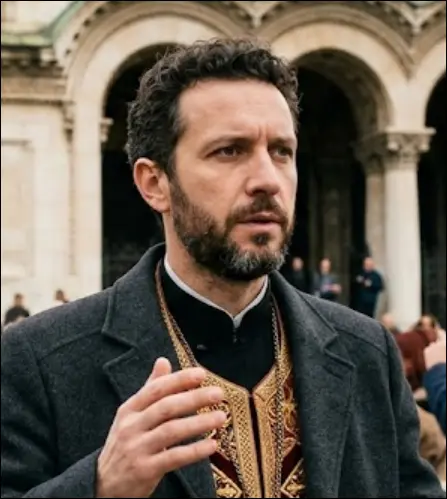
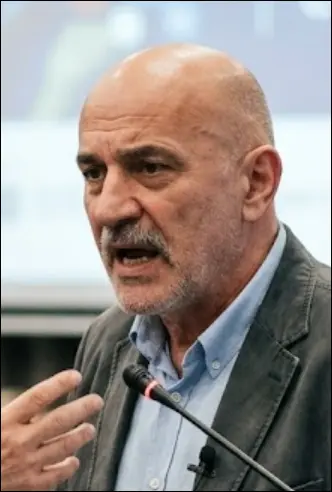
The incumbent independent Mayor, Kiel Turundzhov, declined to run for another term, instead running for Senate for the seat of Pologradska. Turundzhov narrowly lost to the incumbent Senator Malik Kondratiev of the Sons of Kresimir. Kondratiev’s endorsed candidate, Ivan Bran, won election to the mayoralty, beating out Turundzhov’s favoured independent technocrat, Stepen Nikolic. Ivan Bran’s victory represented a spiritual restoration for the Sons of Kresimir, promising to curb the influence of the corporate Maj District and return Polograd to its orthodox, traditionalist roots.
| Name | Party | Vote Share | Change | Elected |
|---|---|---|---|---|
| Ivan Bran | SoK | 37.2% | +15.4% | ✓ |
| Stepen Nikolic | - | 32.9% | New | |
| Viktor von Kres | IHP | 7.8% | -7.0% | |
| Jelena Markovic | CRF | 5.5% | -2.6% | |
| Veselina Marken | SoK | 1.9% | New |
2015 Mayoral Election
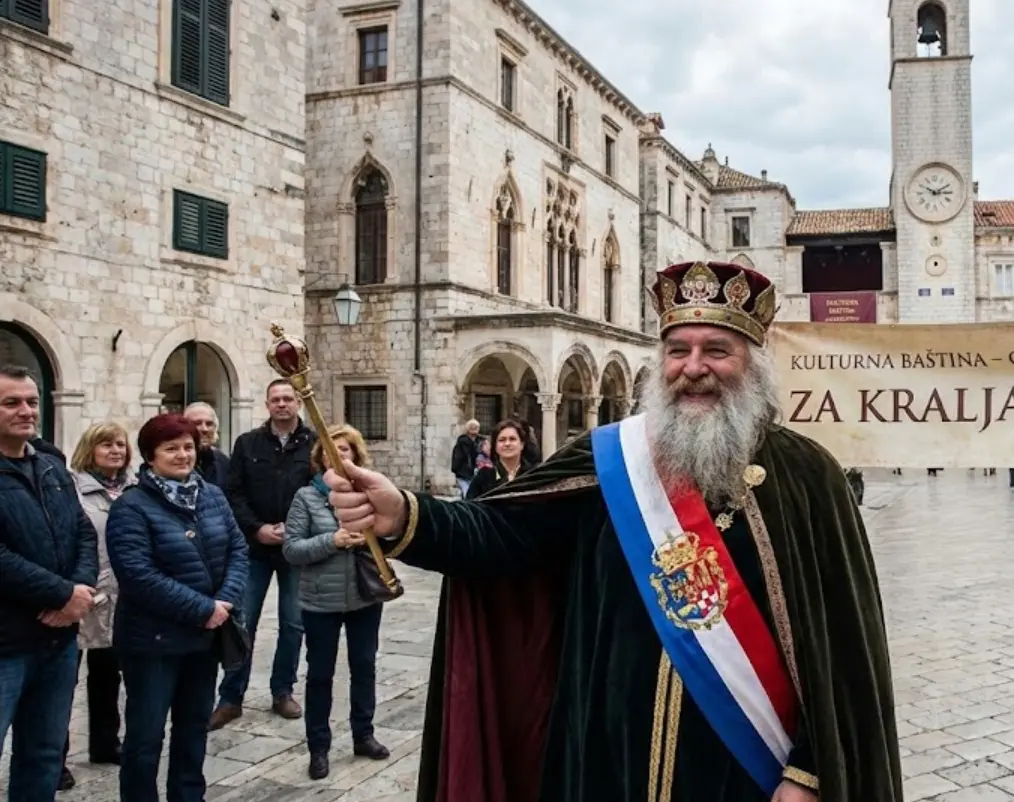
Incumbent Mayor Kiel Turundzhov won re-election, running as an independent. By this time, Turundzhov had drifted away from the conservative establishment, secularizing city institutions and ruling as a highly popular independent technocrat.

| Name | Party | Vote Share | Change | Elected |
|---|---|---|---|---|
| Kiel Turundzhov | - | 41.6% | -23.2% | ✓ |
| Bozidar Milosevic | SoK | 21.8% | New | |
| Viktor von Kres | 14.8% | -12.1% | ||
| Vanja Illilic | VJ | 13.7% | New | |
| Dino Gavranic | CRF | 8.1% | New |
2008 Mayoral Election
Horrified by the eccentricities of Viktor von Kres, the local chapters of Vjetrusa and Sons of Kresimir formed a tactical coalition to reclaim the city for the right-wing establishment. Kiel Turundzhov, then a loyal conservative, ran as the joint candidate and won the election in a landslide. Turundzhov effectively built the modern city during his tenure, overseeing the construction of the Maj Tower and the glass skyscraper district
| Name | Party | Vote Share | Change | Elected |
|---|---|---|---|---|
| Kiel Turundzhov | SoK-VJ Alliance | 64.8% | New | ✓ |
| Viktor von Kres * | IHP | 26.9% | -1.3% | |
| Leonard Tursovic | CRF | 6.1% | New | |
| Sefik Kerkic | BD | 2.2% | New |
2002 Mayoral Election
Viktor von Kres, local eccentric and longstanding infamous Polograd Vosti monarchist, ran a populist and aggressive campaign against the unpopular incumbent Sons of Kresimir Mayor Duro Dedic. Capitalizing on Dedic’s massive unpopularity, von Kres executed one of the greatest electoral shocks in Kresimirian history. Capturing 28.2% of the vote in a highly fractured field, the populist monarchist embarked on a bizarre term, pouring municipal funds into restoring Vosti-era imperial aesthetics and attempting to mandate historical dress codes for city workers.
| Name | Party | Vote Share | Change | Elected |
|---|---|---|---|---|
| Viktor von Kres | IHP | 28.2% | New | ✓ |
| Duro Dedic * | SoK | 25.7% | -18.4% | |
| Jakov Ikavic | BD | 19.8% | +4.2% | |
| Marin Zajec | VJ | 16.2% | New | |
| Edvard Vrban | CRF | 10.1% | +2.6% |
1996 Mayoral Election
Duro Dedic represented the exhaustion of the 20th-century SoK machine. Though he managed to secure the mayoralty in 1996 following the end of the SoK-Vjetrusa compromise era, his administration was quickly defined by stagnation. Plagued by aging infrastructure, potholed streets, and accusations of extreme cronyism, Dedic alienated the business class. He spent city funds heavily on the “Procession of the Scrolls” festival while ignoring the needs of the modernizing business district, making him deeply unpopular by the end of his term.
| Name | Party | Vote Share | Change | Elected |
|---|---|---|---|---|
| Duro Dedic | SoK | 44.1% | New | ✓ |
| Luka Maric | VJ | 32.8% | New | |
| Tarik Omer | BD | 15.6% | +1.2% | |
| Slavica Kolar | CRF | 7.5% | -2.1% |
1985 Mayoral Election
As Maj Holdings grew into a national conglomerate, the Sons of Kresimir realized they could not govern without corporate money. Budimir Gavranovic ran as a consensus builder, formally backed by an unprecedented alliance between the SoK and Vjetrusa. Following his decisive victory, Gavranovic allowed Bran Maj to begin purchasing real estate south of the Old City (the future Maj District) in exchange for Maj Holdings funding the SoK’s youth groups and religious temples.
| Name | Party | Vote Share | Change | Elected |
|---|---|---|---|---|
| Budimir Gavranovic | SoK-VJ Alliance | 58.2% | New | ✓ |
| Mirjana Jovic | BD | 14.4% | +5.1% | |
| Igor Pamic | CRF | 9.6% | New |
1968 Mayoral Election
After Senator Tihomir Bran (SoK) took control of District III in 1962, he needed a fiercely loyal municipal government to enact his vision. He engineered the ouster of the corporate Vjetrusa government and installed his cousin, Zvonimir Bran. This election marked the beginning of the “Bran Era.” For nearly two decades, the Bran family held total control over both the local and federal levers of Pologradska, aggressively resisting the social progressivism emanating from Blue Dawn and the CRF.
| Name | Party | Vote Share | Change | Elected |
|---|---|---|---|---|
| Zvonimir Bran | SoK | 56.5% | +12.4% | ✓ |
| Toni Huzjak * | VJ | 34.2% | -16.9% | |
| Karlo Zima | BD | 9.3% | New |
1959 Mayoral Election
As the newly founded Vjetrusa party began to capture the loyalty of rural business elites, Toni Huzjak, a local businessman and outspoken conservative activist, successfully challenged the incumbent SoK administration. He argued that the city’s religious zealotry and iron-fisted rule were actively harming the Polograd Commodities Exchange. His victory marked a crucial “corporate interlude” that laid the early bureaucratic groundwork for what would eventually become the Maj Holdings corporate empire.
| Name | Party | Vote Share | Change | Elected |
|---|---|---|---|---|
| Toni Huzjak | VJ | 51.1% | New | ✓ |
| Oton Kresimir-Smit * | SoK | 44.1% | -27.1% | |
| Josip Feric | - | 4.8% | New |
1945 Mayoral Election
Following the end of Emanuel Herman’s long and radical tenure, Oton Kresimir-Smit easily held the city for the Sons of Kresimir. Serving concurrently with Luka Matar’s authoritarian “Iron Era” in Sinj, Kresimir-Smit ruled Polograd with a remarkably heavy hand. He officially codified “The Silence” (the strict noise ordinance in the Old City)—not simply out of respect for scholars, but as a direct legal method of suppressing public political gatherings and protests against his administration.
| Name | Party | Vote Share | Change | Elected |
|---|---|---|---|---|
| Oton Kresimir-Smit | SoK | 71.2% | -3.1% | ✓ |
| Matija Horvat | - | 28.8% | New |
1929 Mayoral Election
Following the 1924 Constitutional Crisis and the founding of the Sons of Kresimir, Polograd quickly became radicalized against the central government. Emanuel Herman, running as the first SoK candidate for the city, swept into office, easily defeating the pragmatist incumbent. Herman established the first iteration of the city’s infamous “moral fortress” policies, strictly policing behavior around the Grand Library and actively purging “secular” texts from public circulation.
| Name | Party | Vote Share | Change | Elected |
|---|---|---|---|---|
| Emanuel Herman | SoK | 74.3% | New | ✓ |
| Antun Biskup * | - | 20.1% | -64.9% | |
| Drago Copic | RPP | 5.6% | New |
1922 Mayoral Election
During the Unification War, Polograd avoided bombardment by surrendering early to the Centralist Faction. Recognizing the city’s delicate standing, Filip Novak’s Revolutionary People’s Party (RPP) allowed Antun Biskup, a wealthy pre-war agricultural baron, to stand essentially unopposed as the first Republican mayor. Biskup governed primarily as a pragmatist, focusing his efforts on protecting the Grand Library and stabilizing local grain markets from post-war looting.
| Name | Party | Vote Share | Change | Elected |
|---|---|---|---|---|
| Antun Biskup | RPP-Aligned Ind. | 85.0% | New | ✓ |
| Emil Tadic | - | 15.0% | New |