Cetingrad is the administrative capital and largest city of District VIII (Zahodecelska). Located on the eastern shore of Lake Vokavovic, it is a heavy industrial hub defined by its massive steelworks and port facilities.
The city is widely considered the personal fiefdom of the Maj Holdings conglomerate. The skyline is dominated by the blast furnaces of Vokamet (Maj Holdings’ local steel subsidiary), which employ nearly 40% of the city’s workforce. Cetingrad is characterized by a stark geographic and class divide: the grim, smog-choked industrial zones along the lakefront contrast sharply with the affluent, gated boroughs located on the hills above the pollution line.
Politically, the city is the organisational base of District VIII Senator Misko Maretic, though the Vjetrusa brand itself has been deeply unpopular in Cetingrad since the 1998 Steelworks Incident, when Mayor Said Klopje ran on its ticket as the municipal proxy for eastern owner Bran Maj, beside plant leadership under Ante Bilic. Official Vjetrusa candidates now routinely poll in single digits; the city instead faces increasing pressure from Northern Power’s environmentalist messaging and near-weekly protests against Vokamet and anyone perceived as Maj’s municipal ally. After a decade under Northern Power’s Silvija Bujan, the city elected Independent Robert Lujek — funded from Polograd, introduced locally by Vokamet Managing Director Dragan Huljak — whose hold on office depends more on absentee capital than public trust.
The city’s proximity to the western border with Kruhlstutt has created a massive underground economy, heavily influenced by Kruhlstutt domestic politics. When the right-wing Kruhlstutter Union holds power in the Kingdom of Kruhlstutt, the border is relatively porous, allowing Cetingrad’s oligarchs to easily export steel. However, the border is also plagued by the “Riverine Front,” a Kruhlstutt regionalist political party comprised of ferry captains and logistics brokers who actively lobby to defund western border security, ensuring that untaxed luxury goods and fleeing Kresimirian dissidents can easily slip across the water into Cetingrad’s industrial docks.
Geography and Cityscape
Cetingrad is built on a slope rising from the lake. The city’s geography serves as a physical map of its social hierarchy.
The Iron Shore (Lower City)
The waterfront is entirely industrialized. Access to the lake is blocked by miles of concrete embankments, rail yards, and the sprawling Vokamet Cetingrad Complex. The air quality in this zone is consistently poor, often exceeding federal hazard limits due to particulate matter.
- The Foundry District: Densely packed, brutalist worker tenements built by GradnjaMC in the 1970s for employees of the state-run Vokavovic Iron & Steel Combine and the private Cetingrad Foundry Company — years before Bran Maj entered the steel trade in 1986. This area was the epicenter of the 1998 Steelworks Incident.
Voka Heights (Upper City)
Located on the ridges overlooking the industrial basin, the “Heights” are above the smog layer. This area features leafy boulevards, Neoclassical villas, and modern glass apartments.
- Residents: This area is inhabited by Vokamet executives (such as Managing Director Dragan Huljak), senior engineers, and the political elite of District VIII — not by Bran Maj, who keeps Maj Tower in Polograd.
- The “Golden Gate”: The main road connecting the Heights to the Lower City is heavily policed, effectively segregating the two populations.
History
The Fishing Port (Pre-1950)
Until the mid-20th century, Cetingrad was a mid-sized market town known for its freshwater fishing fleet and boat-building. It was a minor stop on the trade route to the Republic of Kaskiv.
The Industrial Transformation (1950–1986)
Under the centralist planning of the Council for Development, Cetingrad was designated a “Strategic Industrial Node.” The state dredged the harbor to accommodate deep-draft barges carrying coal from Severnivaraje. By the 1970s, the fishing industry had largely collapsed due to early industrial runoff, forcing the population into the factories.
The brutal, violent nature of labor disputes in the city’s steelworks during the 1980s was entirely orchestrated by a supposedly liberal politician. District VIII Senator Radan Vlaev (CRF) secretly laundered millions in embezzled state subsidies to fund a shadow paramilitary militia. Operating with total impunity, these armed thugs were deployed directly into the Cetingrad foundries to physically crush striking SZNO workers on behalf of private factory owners. The 1996 revelation of this conspiracy cemented the city’s absolute, generational hatred for pro-corporate politicians.
The Maj Era (1986–Present)
In 1986, the rising businessman Bran Maj acquired the state-run foundries in the city. Under private ownership, production tripled, but safety standards deteriorated.
1998 Steelworks Accident
The total corporate subjugation of the city was politically formalized in 1993. Following the privatization of the foundries to Maj Holdings, billionaire Bran Maj successfully installed his own logistics manager, Said Klopje, as Mayor of Cetingrad. Running on the Vjetrusa ticket, Klopje functioned purely as a corporate proxy. Over his five-year tenure, he systematically dismantled municipal safety inspections and environmental oversight to maximize steel output, a reckless campaign of deregulation that directly caused the catastrophic 1998 Cetingrad Steelworks Incident.
The city’s darkest moment occurred in November 1998, when the Cetingrad Steelworks Incident killed seven workers and injured dozens. The resulting protests paralyzed the city for weeks, permanently discredited the Vjetrusa brand in the Foundry District, and led to the formation of a radical local chapter of Northern Power, which began campaigning on an anti-pollution platform. Demonstrations against Maj Holdings and Vjetrusa-aligned politicians have remained a recurring feature of Cetingrad civic life ever since.
The horror of the 1998 explosion did not just paralyze Kresimiria; it fundamentally altered the politics of the neighboring Kingdom of Kruhlstutt. SWL leader Phillipp Lexis weaponized the tragedy, exposing that the faulty blast furnace equipment had been manufactured and exported under Kruhlstutt’s deregulated trade agreements. Lexis made the dead Kresimirian steelworkers the absolute focal point of the 1999 Kruhlstutt General Election, transforming a foreign industrial accident into a massive domestic referendum on the morality of Kresimirian-Kruhlstutt corporate complicity.
Economy
Cetingrad’s economy is a “company town” model.
- Vokamet: The primary employer (Maj Holdings subsidiary). The foundries produce high-grade steel for Otonik Ordnance and GradnjaMC. Day-to-day management is local; ownership and dividends sit in Polograd.
- Logistics: The city is the western terminus for the heavy freight lines of Republic Rail. It is also the headquarters of the Maj Logistics trucking fleet for the western districts.
- The Service Sector: A service economy exists in Voka Heights to cater to the wealthy, including private schools and clinics that are superior to the underfunded state facilities in the Lower City.
Politics
Cetingrad is a battleground of ideologies.
- The Vjetrusa Stigma: Since the 1998 disaster, the Vjetrusa brand is widely despised in the Foundry District as shorthand for Maj corporate rule. Senator Misko Maretic retains organisational control of District VIII, but official Vjetrusa mayoral candidates routinely collapse at the ballot box; the party’s last competitive showing was Said Klopje in 1993.
- Northern Power: Syv Iric’s party has gained ground in the Foundry District by highlighting the health impacts of the Red Shore pollution along the lake’s eastern shoreline. Its local chapter organises the frequent demonstrations outside Vokamet and along the contaminated waterfront.
- The Maj proxies: Current Mayor Robert Lujek and Vokamet MD Dragan Huljak are the local faces of eastern ownership. Lujek governs as an Independent bankrolled from Polograd; Huljak speaks for “the Combine.” Protesters denounce both at City Hall.
- The Establishment: Blue Dawn maintains a steady voting bloc in the Upper City, supported by the business management class.
Environment
Cetingrad is one of the most polluted cities in Kresimiria.
- Red Shore: The eastern shoreline near the steelworks is often discoloured by iron oxide and chemical runoff — locally called the Red Shore, distinct from the northern Red Water bauxite contamination associated with SeverMin in Bistrica. Swimming is banned along the entire city front.
- The Smog: During winter temperature inversions, a thick layer of industrial smog traps the Lower City, leading to high rates of respiratory illness similar to the “Black Dust” of Bistrica.
Mayoral Elections
2022 Mayoral Election
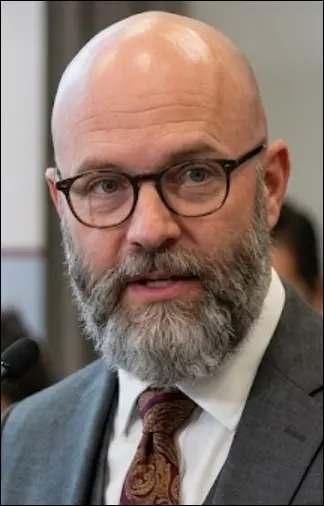
The current Mayor Robert Lujek, a staunch ally of Senator Misko Maretic who governs without a party label, sits on a political powder keg. Vjetrusa remains toxic in Cetingrad after the Klopje era, and Lujek could not have won — and cannot now govern — without the massive financial backing of Maj Holdings / Maj Logistics: untraceable campaign Krejts, subsidised municipal contracts, and a saturation TRK media buy his rivals cannot match. When Bran Maj — still in Polograd — insisted Lujek run as an Independent rather than on the discredited Vjetrusa ticket, Maretic’s district machine backed him anyway while the party ran a nominal candidate, Nikola Grah, who polled in single digits. Facing a fierce campaign from Northern Power — who promised strict liability laws for industrial polluters — Lujek fought a desperate, block-by-block war, relying on Maj money and the workers’ fear of mass unemployment to keep the Foundry District from completely defecting. Even in victory, protesters gathered at Republic Square denouncing Maj and Lujek as the oligarch’s latest proxy; such demonstrations have since become a near-weekly fixture outside City Hall and the steelworks gates.
| Name | Party | Vote Share | Change | Elected |
|---|---|---|---|---|
| Robert Lujek | Ind. | 39.2% | New | ✓ |
| Silvija Bujan * | NP | 35.1% | -2.3% | |
| Goran Matic | BD | 21.8% | -7.0% | |
| Nikola Grah | VJ | 3.9% | New |
2012 Mayoral Election
As the Red Shore pollution visibly worsened and respiratory illnesses spiked in the tenements, Northern Power (emboldened by Syv Iric’s aggressive national leadership) began winning massive vote shares in the Foundry District. Vjetrusa bled working-class voters to the populist eco-socialists, splitting the lower-city vote. This collapse left the incumbent Igor Cvetkov—who had won in 1998 as an independent—stranded in a distant third, allowing Silvija Bujan to capture the mayoralty for Northern Power, narrowly beating Dragan Ivic of Blue Dawn. Her tenure was marked by a tense municipal coalition between the Vjetrusa-loyalist foremen of the lower city and the Blue Dawn management elites of Voka Heights, resulting in Bujan having to balance police crackdowns on wildcat strikes organised by conservative union workers and the enforcement of the 1983 Workers Rights Act.
| Name | Party | Vote Share | Change | Elected |
|---|---|---|---|---|
| Silvija Bujan | NP | 37.4% | +11.6% | ✓ |
| Dragan Ivic | BD | 28.8% | +4.0% | |
| Igor Cvetkov * | Ind. | 27.8% | -7.1% | |
| Nenad Vuk | CRF | 6.0% | New |
1998 Mayoral Election
Following the catastrophic November 1998 Steelworks Incident that killed seven workers, Said Klopje resigned in disgrace, and the Vjetrusa brand—inseparable in the public mind from Klopje and Bran Maj—was politically radioactive. Over the objections of District VIII strongman Misko Maretic, Maj insisted the party run Works Director Ante Bilic, whose official Vjetrusa campaign collapsed under the fury of the Foundry District. Sensing the ticket was doomed, Maretic quietly threw his machine behind Igor Cvetkov, a nominally independent businessman who ran explicitly against both Maj’s corruption and Northern Power’s “eco-radicalism.” Distancing himself entirely from the disgraced conglomerate, Cvetkov pioneered the messaging of “Industrial Protectionism,” convincing the furious steelworkers that the newly formed local chapter of Northern Power would shutter the foundries and starve their families. In one of the closest races in Kresimirian history, Cvetkov narrowly took the mayoralty as an independent, heavily aided by Blue Dawn holding onto just enough establishment votes to deny Northern Power an outright victory. He would formally join Maretic’s rehabilitated Vjetrusa within his first term, running as its incumbent by 2012.
| Name | Party | Vote Share | Change | Elected |
|---|---|---|---|---|
| Igor Cvetkov | Ind. | 34.9% | New | ✓ |
| Marin Zima | NP | 33.5% | +24.1% | |
| Karlo Senar | BD | 17.8% | -13.4% | |
| Ante Bilic | VJ | 13.8% | -39.4% |
1993 Mayoral Election
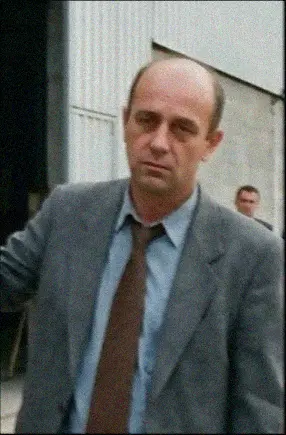
Mirko Knezic (BD) resigned abruptly in 1993 following mass wildcat protests over the privatization and sale of the foundries to Maj Holdings. With the political gravity of the city instantly shifting, Bran Maj threw the full financial weight of his conglomerate behind Said Klopje and the Vjetrusa party. Klopje swept into office functioning purely as a corporate proxy. Over the next five years, he would gut local municipal safety inspections and environmental oversight to help Vokamet triple its production, setting the stage for the ‘98 disaster.
| Name | Party | Vote Share | Change | Elected |
|---|---|---|---|---|
| Said Klopje | VJ | 53.2% | +24.9% | ✓ |
| Petar Vlasic | BD | 31.2% | -23.4% | |
| Domagoj Belic | NP | 9.4% | New | |
| Vedran Leko | CRF | 6.2% | New |
1986 Mayoral Election
By the mid-1980s, the state-run foundries were bleeding money due to bloated bureaucracy and failing equipment. When the federal government under socialist Ljubo Sanjakorin blocked Mayor Vladimir Kos from selling the foundries, Kos resigned in protest. Mirko Knezic, a former labor organizer and unionist, won the resulting election for Blue Dawn on a massive mandate for local reform. Following the nationally disastrous 1992 elections, Knezic finally convinced a weakened Sanjakorin to allow the privatization, leading directly to the Maj Holdings acquisition of many local foundries.
| Name | Party | Vote Share | Change | Elected |
|---|---|---|---|---|
| Mirko Knezic | BD | 54.6% | -8.2% | ✓ |
| Stjepan Maric | VJ | 28.3% | +7.1% | |
| Zoran Leljac | SoK | 10.6% | +2.1% | |
| Boris Horvat | BD-Hardliner | 6.5% | New |
1972 Mayoral Election
Following the departure of hardline central planner Leon Rudar, Vladimir Kos took over the reins for Blue Dawn. Kos presided over the peak output of Kresimiria’s state-owned heavy industry, but his tenure quickly became defined by stagnation as the 1970s progressed into the 1980s. Unable to modernize the rapidly decaying state plants, Kos found himself politically besieged by the market-reform wing of his own party, eventually leading to his resignation in 1986.
| Name | Party | Vote Share | Change | Elected |
|---|---|---|---|---|
| Vladimir Kos | BD | 62.8% | New | ✓ |
| Luka Peric | VJ | 21.2% | New | |
| Tihomir Vucic | SoK | 8.5% | New | |
| Davor Senar | - | 7.5% | New |
1950 Mayoral Election
With the initial bureaucratic groundwork laid by his predecessor, Leon Rudar (running under the RPP, though he would seamlessly transition to Blue Dawn as the party system evolved) took office to execute the state’s vision of Cetingrad as a “Strategic Industrial Node.” Rudar was a hardline centralist who oversaw the dredging of the harbor, the construction of the deep-draft coal barges, and the deliberate environmental strangulation of the remaining fishing industry to force the local population into the new state-owned smelting factories.
| Name | Party | Vote Share | Change | Elected |
|---|---|---|---|---|
| Leon Rudar | RPP | 76.4% | +18.1% | ✓ |
| Matej Mornar | Ind. (Guilds) | 23.6% | -18.1% |
1938 Mayoral Election
As the Republic modernized, the central government in Sinj began looking at Cetingrad’s deep-water potential. Stjepan Brod was elected as a transitional bureaucrat explicitly to dismantle the power of the local freshwater fishing guilds. Over his tenure, Brod cleared the prime waterfront property and laid the legal framework for the Council for Development’s massive industrial pivot that would forever change the city’s landscape.
| Name | Party | Vote Share | Change | Elected |
|---|---|---|---|---|
| Stjepan Brod | RPP | 58.3% | New | ✓ |
| Jakov Mornar * | Ind. (Guilds) | 41.7% | -41.2% |
1922 Mayoral Election
Before the smog and the steel, Cetingrad was a prosperous fishing and boat-building hub. Jakov Mornar, the head of the local freshwater fishing guilds, easily won the city’s first Republican municipal election. Cooperating closely with Filip Novak’s Revolutionary People’s Party (RPP), Mornar maintained a peaceful, relatively autonomous administration focused on securing lucrative trading rights across Lake Vokavovic to the Kruhlstutt Kingdom’s border.
| Name | Party | Vote Share | Change | Elected |
|---|---|---|---|---|
| Jakov Mornar | Indp. | 82.9% | New | ✓ |
| Filip Kovac | - | 17.1% | New |