Ljubo Sanjakorin (1939–2014) was a Kresimirian politician and trade unionist who served as Chair of the Assembly from 1981 to 2002 and the fourth leader of the Blue Dawn party. A Senator for the industrial district of Kakerovecska for 35 years, he was the primary architect of Kresimiria’s modern mixed economy.
Sanjakorin is best known for authoring and passing the 1988 State Enterprise Act, which checked the power of private conglomerates and established major state-owned companies, most notably Republic Rail. His tenure represented a distinct “Statist-Labor” era in Kresimirian politics, characterized by a fierce rivalry with the rising business oligarch Bran Maj.
Early Life and Union Career
Ljubo Sanjakorin was born in 1939 in Novi Otonik, the heart of Kresimiria’s heavy industry. The son of a steelworker, he entered the factories at a young age. In the early 1960s, he became an organizer for SZNO (Stalnija-Zelezhna Novi Otonik), the state-sanctioned trade union representing the iron and steel industries.
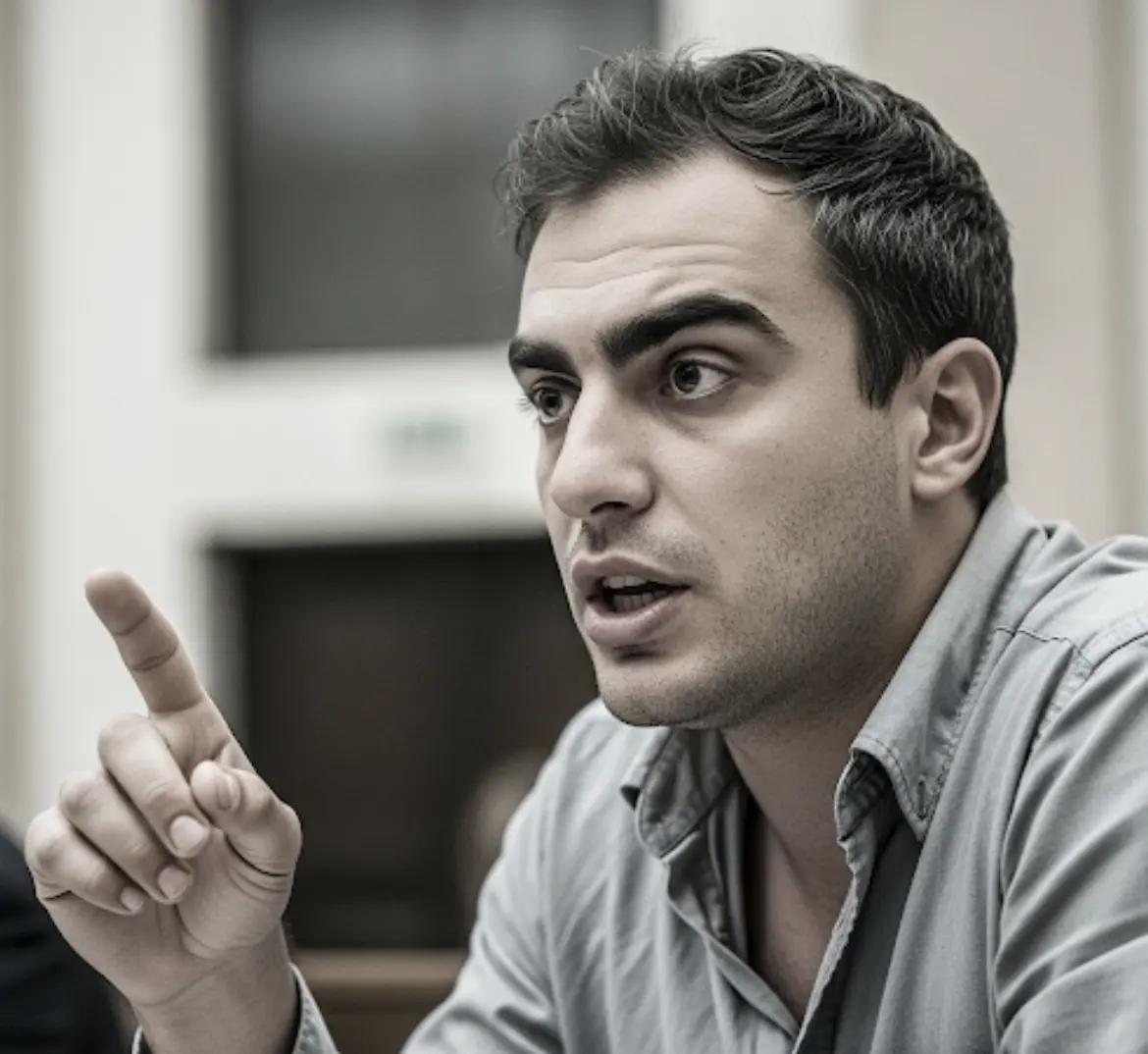 Sanjakorin negotiating on behalf of SZNO workers, 1978.
Sanjakorin rose rapidly through the union’s hierarchy, gaining a reputation as a tough negotiator who was unafraid to challenge factory management. By the late 1970s, he was the most prominent public figure representing the industrial working class, a demographic that formed the bedrock of the Blue Dawn party’s support.
Political Career
Entry into the Assembly
Recognizing Sanjakorin’s influence in the vital electoral district of District II, Blue Dawn leader Ante Brov recruited him to run for office. In the 1979 special election triggered by a vacancy in Kakerovecska, Sanjakorin won a decisive victory.
Upon entering the Assembly, Sanjakorin refused to resign his union membership, a controversial move that drew criticism from conservative elements but was staunchly defended by Ante Brov.
Before becoming party leader, Sanjakorin proved his legislative skill by negotiating the 1979 Industrial Safety Standards Act with Ante Brov. Although the Act fell short of legalizing unions, Sanjakorin accepted it as a strategic victory that saved lives in his home district of Kakerovecska while building his profile as the champion of the working class.
Sanjakorin’s rise was heavily patronized by Ante Brov. The establishment leader saw the young unionist as the future of the party and protected him from internal critics. Brov’s endorsement in 1981 was the decisive factor in Sanjakorin’s election as party leader over the veteran Nika Radman.
Chair of the Assembly (1981–2002)
In 1981, following Ante Brov’s retirement, Sanjakorin stood for the party leadership. He ran against the legendary Divine Founder Nika Radman. Framing himself as the candidate of the future and the voice of the “new industrial Kresimiria,” Sanjakorin narrowly defeated Radman in a 6–4 vote of the party caucus.
Sanjakorin served as Chair at the same time as reformist liberal Ivan Piltz served as President of Boskenmark. The lack of tensions on the southern border helped Sanjakorin focus on economic overhaul, defining his leadership mostly by domestic policy.
Sanjakorin’s leadership was defined by his ideological commitment to state intervention. During the 1980s, the Kresimirian economy saw the rapid rise of private conglomerates, particularly Maj Holdings, led by Bran Maj. Sanjakorin viewed Maj’s acquisition of strategic assets as a threat to national sovereignty and worker welfare.
Sanjakorin’s first major achievement was the 1983 Workers Rights Act. By amending the constitution to legalize trade unions and strikes, he fulfilled his core campaign promise to the industrial base. This legislative victory consolidated his power and weakened private conglomerates, paving the way for his later nationalization programs.
To fuel the massive foundries of Maj Steel and appease the powerful northern trade unions, Sanjakorin required a volume of energy that domestic coal simply could not provide. In 1983, he signed a landmark treaty to build the Trans-Republic Pipeline. While the influx of Kaskivian natural gas successfully powered Kresimiria’s 1980s economic boom, Sanjakorin’s decision permanently tethered the Republic’s industrial survival to the whims of the Kaskivian parliament.
Sanjakorin also famously championed the 1988 State Enterprise Act. The amendment formalized the state’s ability to own and operate businesses. Following its passage, Sanjakorin oversaw the creation of Republic Rail, a state-owned enterprise that nationalized and modernized the country’s fragmented railway network. The successful launch of KSO1, the high-speed rail link between Sinj and Novi Otonik, remains Sanjakorin’s most tangible legacy.
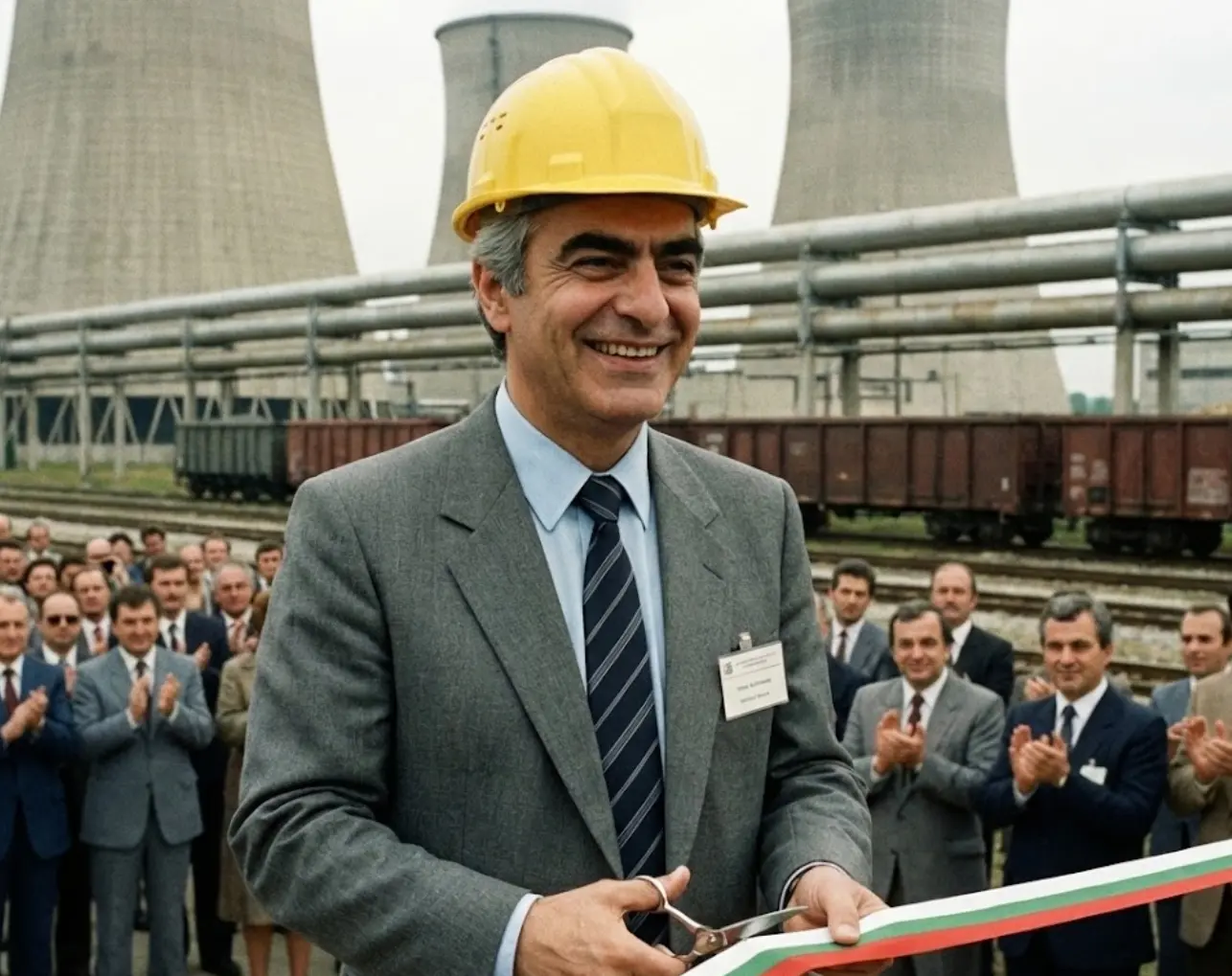 Sanjakorin speaking at the opening of the Republic Rail terminal in Sinj, 1989
Sanjakorin found an unlikely admirer in Jannik Vorreich, the socialist President of Boskenmark (1990–1998). The two leaders maintained a pragmatic ‘Red Détente,’ signing the 1992 Iron-for-Grain Pact. Sanjakorin privately advised Vorreich on nationalization strategies, though he later distanced himself when the Bosken president’s administration collapsed in scandal in 1998.
While popular with his industrial base, Sanjakorin’s heavy-handed economic policies alienated the growing urban middle class. Under his leadership, Blue Dawn suffered a slow electoral decline. In the 1992 election, the party fell to a historic low of six seats, tying with the resurgent Civic Renewal Front (CRF).
Retirement and Death
Facing internal pressure to modernize the party’s appeal, Sanjakorin stepped down as leader in 2002, paving the way for the more rural-focused Stoyan Vasilis.
He remained in the Assembly as the senior Senator for Kakerovecska, serving as an elder statesman and a vocal defender of the state enterprises he helped create. He died in office on January 14, 2014, at the age of 74.
His death triggered the 2014 special election, in which his long-held seat was lost to the CRF’s Vesna Horvatin, symbolizing the end of the industrial labor dominance in the district.
Legacy
Ljubo Sanjakorin is remembered as a transformative but polarizing figure. To the trade unions and the political left, he was a champion who protected Kresimiria’s strategic industries from predatory privatization. To economic liberals and the business elite, he was an obstacle to growth whose statist policies stagnated the economy for two decades.