Nika Radman (1902–2001) was a Kresimirian statesman, soldier, and one of the six Divine Founders of the Divine Republic of Kresimiria. Representing District V (Moskiprovac) from the inaugural session in 1922 until his retirement in 1982, he holds the unbroken record as the longest-serving member of the Assembly (60 consecutive years).
Unlike many of his fellow founders, Radman never served as Chairman of Kresimiria. Often referred to as the “Grandfather of the Assembly,” Radman was the youngest member of the Revolutionary People’s Council in 1921. A fierce centralist and a core architect of the Blue Dawn establishment, his extraordinary political longevity allowed him to bridge the gap between the revolutionary era of Filip Novak and the industrial, statist era of Ljubo Sanjakorin. Radman was famous nationwide for his extreme personal austerity and his absolute refusal to leave his modest, working-class home in Vijrje for the luxury of the capital. Despite building an impeccable, disciplined political machine in his home district over six decades, he lived long enough to watch his handpicked successors entirely destroy his legacy in the 1990 Vijrje Restoration Scandal.
Early Life and the Revolution (1902–1921)
Born in 1902 in the central logistics hub of Vijrje, Radman was the son of impoverished railway engineers. When the Unification War erupted following the collapse of the Vosti Empire in 1918, he lied about his age to join the Centralist Faction militia at just 16 years old.
Radman’s rise to power was highly unorthodox; he was neither a general like Dominik Loncar nor a religious zealot like Kresimir Basic. Instead, his phenomenal organizational competence and fanatical loyalty caught the eye of the revolution’s charismatic leader, Filip Novak. Radman became Novak’s personal aide-de-camp and most trusted runner.
When the Revolutionary People’s Council was formed in 1921 to draft the Constitution, Novak explicitly demanded Radman’s inclusion. At only 18 years old, Radman was seated as the representative of the “Republican Youth,” cementing his historical status as a Divine Founder of the Republic.
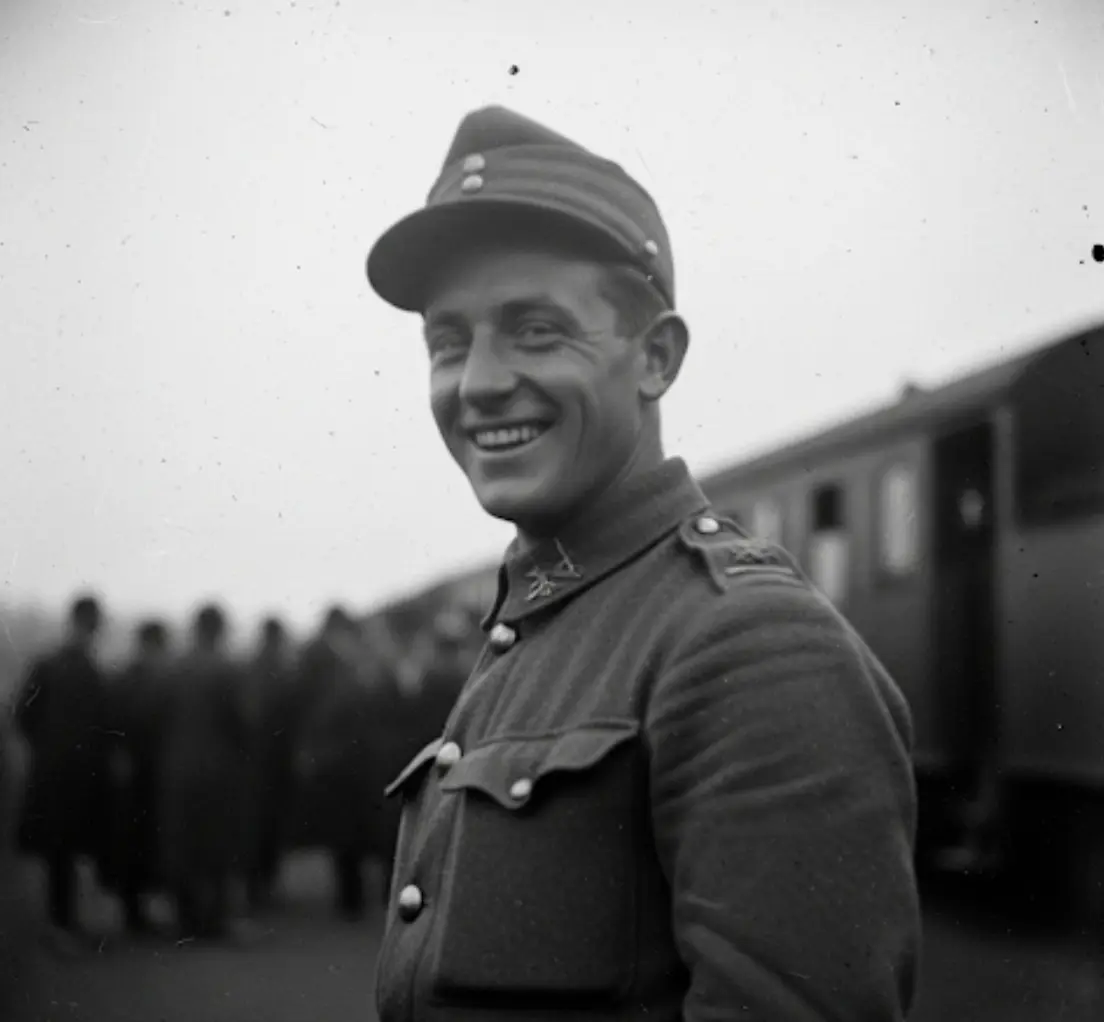 Radman in 1921 at the age of 18.
Senatorial Career (1922–1952)
In the 1922 election, the 20-year-old Radman was elected as the Senior Senator for District V under the banner of Novak’s Revolutionary People’s Party (RPP). He held the record as the youngest elected Senator in history until it was broken by Ivic Davor Kovrekovic in 1952.
The 1931 Security Crisis
Radman’s early career was defined by horrific trauma. Tasked with organising the Republic’s 10th-anniversary celebration in his home district of Vijrje, Radman strongly advocated for a massive, militarized “lockdown” security protocol, fearing a strike by Bosken separatists. However, he was overruled by his district co-Senator, Dora Martinovic, who successfully argued for relaxed measures to maintain a festive atmosphere.
The subsequent 1931 BRC-21 terror attack devastated the city center. The bombing entirely vindicated Radman’s hardline security stance but left him deeply embittered and paranoid. In response, he became the primary legislative architect of the 1933 National Security Act, creating the internal passport system and aligning himself permanently with the security hawks of the CIA.
World War II Era and Industrial Mobilization
While Kresimiria remained officially neutral during the global conflicts of the 1940s, Radman utilized his gubernatorial authority to rapidly transform District V into a massive bureaucratic and industrial commuter hub. He centralized food distribution and integrated the district’s factories directly into the Republic Rail network, ensuring Sinj was permanently supplied from the central plains.
The Blue Dawn Era and the “Iron Era” (1952–1981)
Following the retirement of Filip Novak, Radman joined his fellow Divine Founder Luka Matar in establishing the Blue Dawn party in 1951.
During the brutal authoritarianism of the 1950s “Iron Era,” Radman served as a critical, stabilizing force. Following the 1954 assassination of Kresimir Basic, Radman quietly but firmly supported Chancellor Kresimirovic II and General Borna Kulas in executing the Great Purge of 1955, viewing the militarization of the state as the only way to prevent another 1931-style terror attack.
The “Man of the People”
Despite his immense, decades-long influence in the Assembly, Radman famously cultivated an image of extreme, ascetic austerity. He vehemently refused to move to the wealthy “Gold District” of Sinj. For sixty years, he lived in his modest, pre-war house in Vijrje, commuting to the Assembly daily via the Republic Rail network. This extreme visibility and refusal to embrace luxury made him politically untouchable in District V; working-class voters viewed him as the incorruptible, living embodiment of the Republic’s founding ideals.
The 1981 Leadership Challenge
By 1981, following the resignation of Ante Brov, Blue Dawn was facing a severe internal crisis. The party was fracturing between the older, authoritarian traditionalists and a rising faction of industrial trade unionists led by Ljubo Sanjakorin.
Radman, then 79 years old, stood for the Blue Dawn leadership. He campaigned on a strict return to the “Founding Values” of Filip Novak and Luka Matar. However, the younger party caucus viewed his intense austerity and Iron Era mentality as a relic of a bygone century. In a tense, closed-door vote, Radman was defeated by Sanjakorin by a margin of 6 to 4 (with figures like Stojana Czyhlarz backing Radman).
Retirement and the Destruction of his Legacy
Deeply stung by the rejection and recognizing that the Kresimirian state had moved beyond him, Radman announced he would not seek re-election in the 1982 election.
To preserve his 60-year political machine in District V, Radman handpicked his successors: Mlada Wrba, a young accountant who had served on his staff, and Stevan Pozar, a charismatic urban planner tapped to run for Mayor of Vijrje. Radman’s absolute endorsement guaranteed their victories.
However, the impeccable, fiercely disciplined political machine that Radman had built ultimately rotted from the inside out. In 1990, investigative journalists exposed that Senator Wrba and Mayor Pozar had systematically embezzled millions of state funds intended to rebuild the 1931 Memorial Square, utilizing a shell company to build private luxury villas.
The resulting “Vijrje Restoration Scandal” completely destroyed the generational trust Radman had built with the district’s working class. The 90-year-old Radman was forced to watch his handpicked successors arrested and imprisoned, an event he reportedly described to his few remaining confidants as “the final, miserable death of the Revolution.”
Death
Nika Radman lived the remainder of his life in absolute, quiet obscurity in his home in Vijrje. He steadfastly refused all media requests from TRK to comment on modern politics or write a memoir. He died in 2001 at the age of 99, passing away as the very last surviving member of the Revolutionary People’s Council. Today, his modest home in Vijrje is preserved as a state museum, serving as a monument to the austere, uncompromising ideals of the Republic’s founding generation.