Eward Matek (1880–1957) was a Kresimirian historian, philosopher, and statesman who is recognized as one of the six Divine Founders of the Republic of Kresimiria. While initially a key ally of Filip Novak’s Revolutionary People’s Party during the founding of the state, Matek eventually became the principal architect of Kresimirian liberalism.
In 1932, disillusioned by the authoritarian drift of the government, he broke away from the ruling party to found the Civic Renewal Front (CRF). He served as a Senator for District III (Pologradska) for thirty years and is widely regarded as the “Conscience of the Republic” for his staunch defense of civil liberties during the pre-Treaty era.
Early Life and Academic Career
Born in 1880 in the town of Kakerovec, Eward Matek was a renowned intellectual long before he was a politician. He studied history and philosophy at Karlovac University, where he later became a tenured professor. His academic work focused on the legal and social structures of the early Kresimirian principalities, arguing that the true Kresimirian tradition was one of communal liberty rather than autocratic rule.
The Unification War and the Republic
When the Vosti Empire collapsed in 1918, Matek threw his intellectual weight behind the Centralist Faction. He believed that a unified republic was the only way to protect Kresimirian culture. He joined the Revolutionary People’s Council, serving as the group’s ideologue and drafter.
While Filip Novak and Kresimir Basic focused on the religious and statist aspects of the new state, Matek is credited with authoring the “Rights and Duties” section of the 1921 Constitution. He was the primary advocate for the inclusion of progressive articles such as Article 31 (Bodily Autonomy) and Article 33 (Marriage Equality), which he argued were consistent with the enlightened benevolence of Lord Kresimir.
Political Career
The RPP Years (1922–1932)
Following the war, Matek was elected as a Senator for District III in the inaugural 1922 election under the banner of Novak’s Revolutionary People’s Party (RPP). However, he quickly grew uncomfortable with the direction of the new government.
The 1924 Constitutional Crisis and the subsequent formation of the hardline Sons of Kresimir alarmed him. Matek viewed the increasing centralization of power in the Chancellory and the Council for Internal Affairs as a betrayal of the Republic’s democratic promise. He frequently clashed with Kresimir Basic in the Assembly, arguing against the militarization of the state.
Founding the Civic Renewal Front
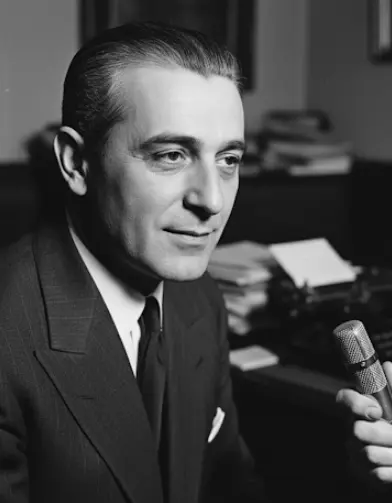 Matek in 1939
The breaking point came in late 1931, when the RPP leadership proposed further restrictions on civil liberties in response to the Vijrje Anniversary Attack. In January 1932, Matek formally resigned from the RPP. Along with three other liberal-minded senators (Touko Lapic, Mia Colak, and Vlade Koci), he founded the Civic Renewal Front (CRF).
In the 1932 election, Matek’s new party won four seats. This split the establishment vote and cost the RPP its absolute majority in the Assembly for the first time, forcing Novak to govern with a plurality.
Leader of the Opposition (1932–1952)
For the next twenty years, Matek served as the de facto leader of the opposition. He used his position to fight a rearguard action against the authoritarian policies of Chancellor Kresimir Kresimirovic II.
- 1933: He led the opposition to the National Security Act, delivering a famous speech in the Assembly where he warned that “security purchased at the cost of liberty is a debt our children will be unable to pay.”
- 1942: He voted against the amendment granting the Chancellor veto power, arguing it created a “monarch in all but name.”
Although he was often outvoted by the RPP-SoK bloc, Matek’s presence ensured that a liberal, democratic voice remained part of the national discourse.
Retirement and Death
Eward Matek retired from politics prior to the 1952 election, handing the leadership of the CRF to his protégé, Adam Corak. He retired to his family home in Kakerovec, where he spent his final years writing a comprehensive history of the Unification War.
He died in 1957 at the age of 77. His funeral was attended by dignitaries from across the political spectrum, including his former rival Filip Novak, who eulogized him as “the sharpest mind and the kindest soul of our generation.”